


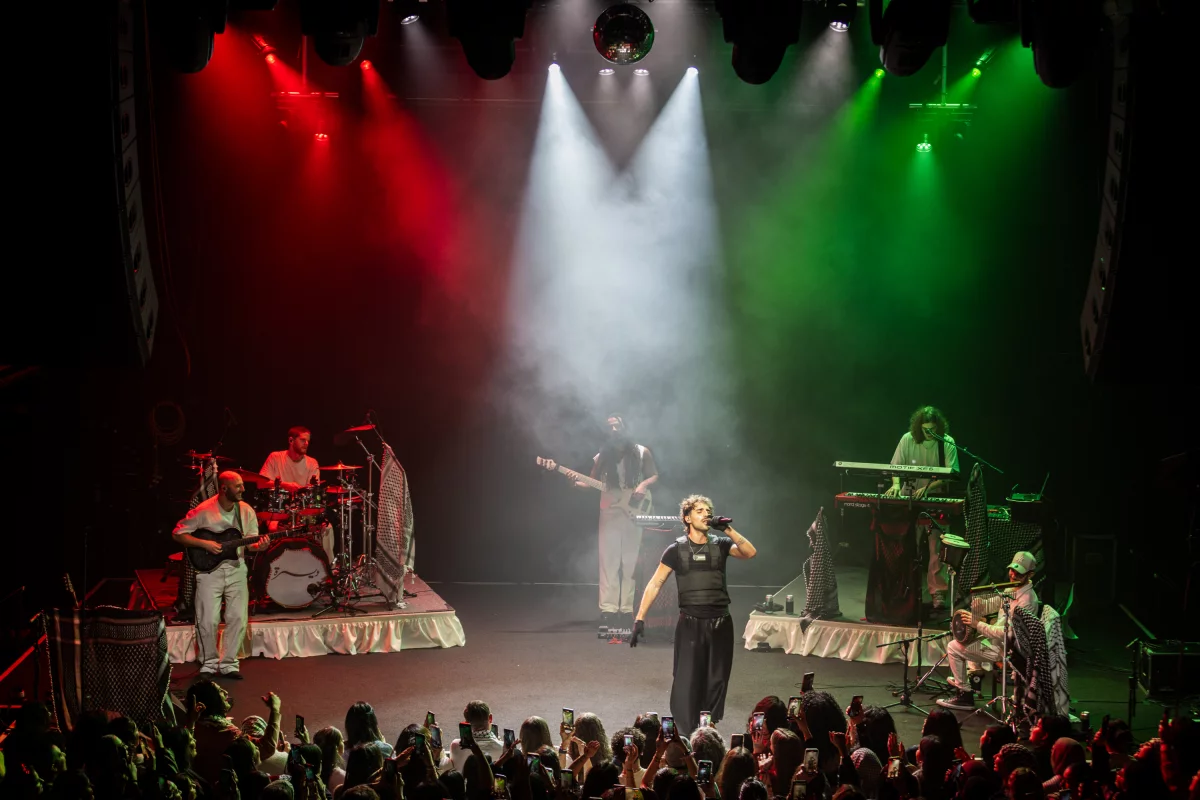
Saint Levant—whose real name is Marwan Abdelhamid—has become one of the most influential voices in contemporary Arab music, not only for his multilingual musical style and genre fusion, but also for his way of reconfiguring narratives about identity, culture, and politics. Born in Jerusalem, raised in Gaza, and educated across several countries, Saint Levant uses his art to raise awareness of the Palestinian experience and to counter cultural and Islamophobic prejudices from an international perspective.
Roots and Cultural Identity
Marwan’s story is marked by a complex trajectory of displacements: his father is Palestinian-Serbian and his mother Franco-Algerian. He spent much of his childhood in the Gaza Strip before moving to Jordan in 2007 due to the region’s political circumstances. Later, he relocated to the United States, where he continued his studies in International Relations. He grew up speaking Arabic on the streets, French at home, and learning English in academic settings, which early on shaped a multicultural and trilingual perspective in his artistic development.
This plural background not only defines his sound but also challenges simplistic narratives about what it means to “be Arab” or “be Muslim” in today’s global art scene.
Musical Career: From TikTok to the Global Stage
Saint Levant is known for his musical style, which fuses contemporary pop, R&B, hip-hop, rap, and traditional rhythms from the Arab world, allowing him to connect with diverse international audiences. The distinctiveness of his artistic approach—mixing Arabic, French, and English in his lyrics—is not merely aesthetic: it is a conscious strategy of cultural representation that counters stereotypes and highlights alternative narratives that challenge the stigmatization of Muslim and Arab communities.
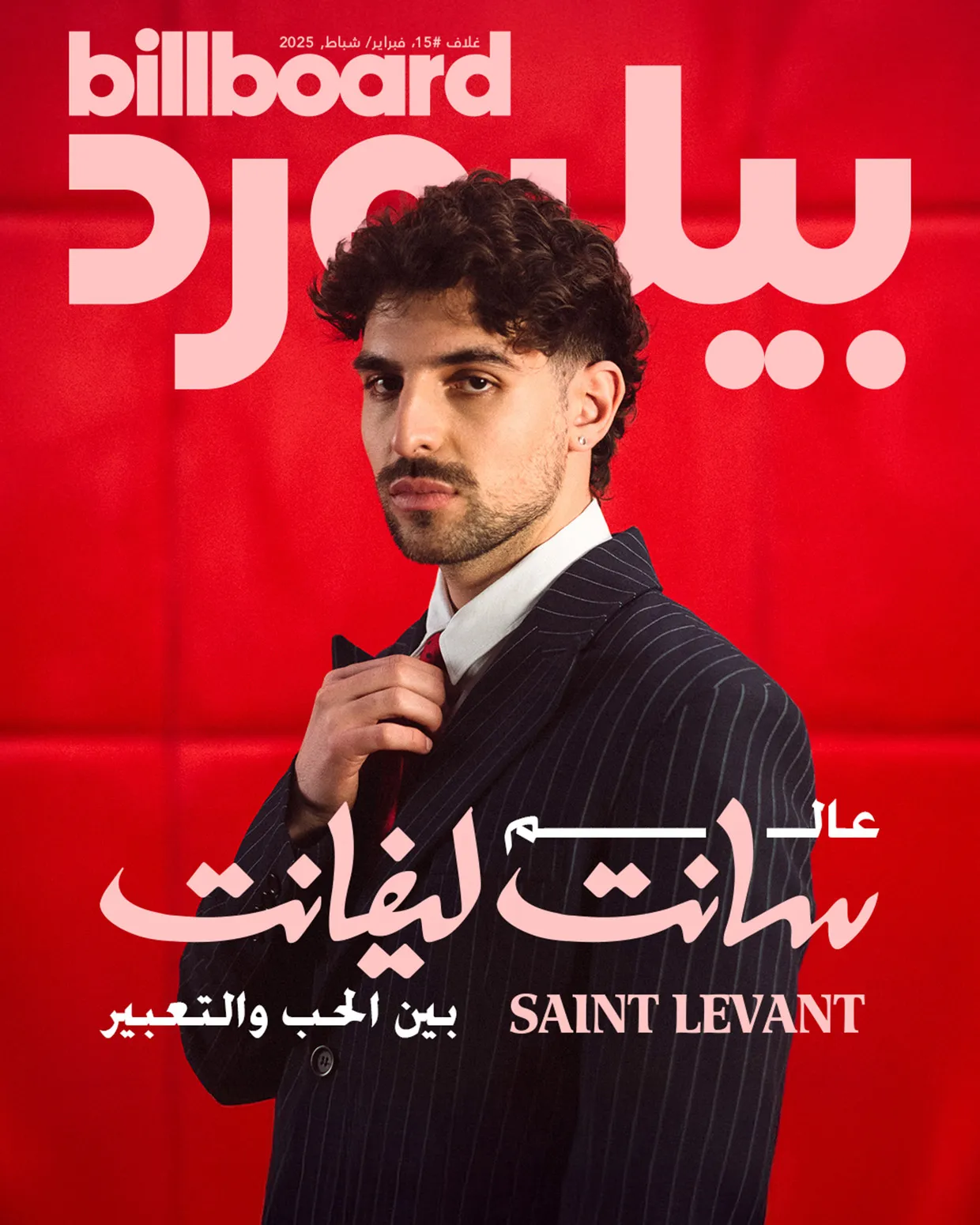
Saint Levant in Billboard Arabia
He began his career in 2020 by publishing content and his first politically themed songs on the TikTok platform, before fully venturing into music with tracks like Jerusalem Freestyles and Nirvana in Gaza. His international breakthrough came with the 2022 release of the single Very Few Friends, which gained millions of plays worldwide on platforms like Spotify and TikTok.
Since then, he has released the EP From Gaza, With Love (2023), the album DEIRA (2024), and Love Letters (2025), projects that combine classical elements of folklore and Arabic instruments with modern music production techniques.
Deira, for example, is an album centered on the right of return and the longing for freedom, integrating sounds from Algerian chaabi while honoring the memory of the Palestinian land and Marwan’s own family history.
We left our city behind, heartbreaking exile
Say hello to Jericho
and the old medina for me
oh, you travelling bird
on this generous land
they can’t take what’s inside us
between the river and the mountains
I find my belonging
between the shore and the sand
Is where my life began
oh, my homeland
so much joy, so much sorrow
oh my precious homeland
our beloved Palestine is calling
— Deira (2024)
Saint Levant – Deira ft. MC Abdul (Official Video)
Music with a Political Purpose
Saint Levant has explained in several interviews that his work is not only artistic but also deeply political and contextual: he aims to provide understanding of Palestinian history in the face of global misunderstandings.
In a statement to Harper’s Bazaar, he noted that his work consists of “dismantling misconceptions about the conflict in Palestine,” emphasizing that it is not about “two equal sides hating each other,” but rather over 80 years of occupation, oppression, and displacement.
In doing so, Saint Levant positions himself directly within the discussion against Islamophobia: his music contextualizes the Palestinian struggle, humanizes the affected communities, and counters homogenizing narratives about Arabs and Muslims.
Activism and Solidarity with Gaza
Saint Levant has used his platform to speak openly about the Israeli occupation and the crisis in Gaza, even when he has been urged not to do so. His performances at benefit events, such as concerts in support of the Palestinian cause, have raised funds and drawn international attention to the humanitarian situation in the Strip.
View this post on Instagram
Beyond Music, Saint Levant co-founded the 2048 Foundation, a project aimed at funding and supporting Palestinian creatives and entrepreneurs, strengthening cultural and economic networks in communities affected by conflict. Named in reference to the centenary of the Nakba (1948), the foundation not only fosters artistic projects but also combats the invisibility of Muslim and Palestinian narratives in global art, providing resources for other voices to express themselves and gain empowerment. Initiatives like this are particularly important to counter structural Islamophobia, which marginalizes Arab and Muslim creatives and limits their opportunities on global platforms.
Music as a Cultural Bridge
It is not only about politics or sound: Saint Levant’s “trilingualism” and his fusion of musical styles are also tools against cultural prejudice.
By combining Arabic, French, and English, he incorporates phonetics, rhythms, and expressions that challenge Western audiences’ expectations of how an Arab voice “should sound” in popular culture.
This approach has been highlighted by critics and music platforms as an act of “creative hybridization” that breaks stereotypes and creates spaces for empathy and identification—especially for young members of the Arab diaspora seeking positive artistic representation.
My body in Paris
My heart in Gaza,
My soul in Algiers, […]
I don’t feel at home anywhere,
My family in the East
My friends in the West
My mother is deeply tied to this land […]
I will never forget my upbringing in war.
— 5am in Paris (2024)
Saint Levant represents a new generation of artists who are redefining the presence of Arab and Muslim identity in popular culture. His global visibility breaks monolithic narratives and promotes a deeper understanding of the contemporary Arab world. Through festivals, interviews, and international collaborations, his voice has been key in demonstrating that music can be a space for cultural resistance, as well as a platform where Muslim and Arab artists can tell their stories on their own terms. In times of global tension, this kind of representation is a powerful tool to combat Islamophobic discourse: Saint Levant does not only sing, but connects, explains, and asserts.
Patricia Ogando Antolín
References
-
SaintLevant.com. Official website of Saint Levant. https://saintlevant.com
-
Hajjar, D. (2025, February 18). How Palestinian star Saint Levant is helping uplift & support his people. GRAMMY.com. https://www.grammy.com/news/
-
Tobah, S. (2025, November 26). Saint Levant is levelling up. GQ Middle East. https://www.gqmiddleeast.com/article/
- Boty, M. (2023, December 18). Saint Levant: The Palestinian body resisting stereotyping and the occupation. Raseef22. https://raseef22.net/english/article/
-
Al-Waheidi, M. (2024, December 20). A loverboy and a Palestinian: Saint Levant’s new album is about loss and growth. NPR. https://www.npr.org/2024/12/20/
-
Siddique, A. (2023, January 12). Saint Levant: Home‑maker. Alserkal Online. https://alserkal.online/words/
- García, C. (2024, June 29). El rapero palestino Saint Levant alza la voz por Gaza. La Razón. https://www.larazon.es/










No Comments