• Home
  • ¿Por Qué?
  • Multimedia
  • Twist
  • Teach
    • Glosario
  • Share
    • Cuentanos tu experiencia
  • Coexist
  • Red
    • Colaboradores
    • Activities
  • en
  • es
Twist Islamophobia
Twist 0

Islamophobia in contemporary sports

By Fundación de Cultura Islámica · On 9 June, 2026


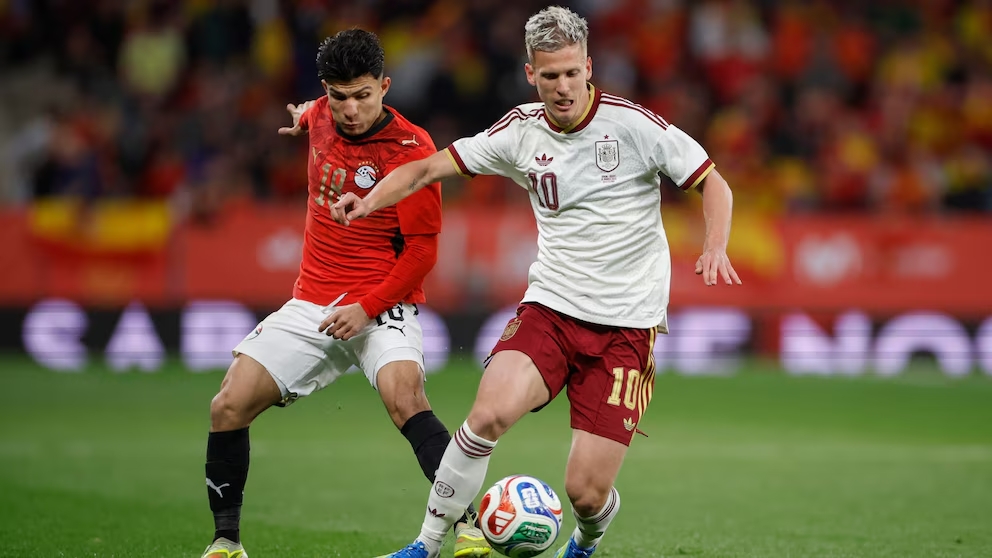
On March 31, 2026, during a friendly match between Egypt and Spain at the RCDE Stadium in Cornellà-El Prat, Islamophobic chants such as « Musulmán el que no bote» (« Jump if you’re not a muslim») were heard among the crowd. In response to this event, Spain’s national team coach Luis de la Fuente and the president of the Real Federación Española de Fútbol (RFEF), Rafael Louzán, publicly condemned the incident. On the other hand, Lamine Yamal, the only Muslim player on the Spanish national team, described the events as «a lack of respect and something intolerable » (El Progreso, 2026; RTVE, 2026). These instances of Islamophobia and racism in sports are neither new nor isolated events.

Islamophobia in sports, neither new nor exceptional

Faced with these Islamophobic acts of hate, not all players react in the same way. Among the existing examples, we can cite Dani Alves, who ate the banana thrown at him from the stands at Villarreal CF—a racist gesture of contempt. Others decided to walk off the pitch in these contexts, such as Moise Kean, then a Juventus forward, in 2019, or Moussa Marega, a FC Porto player, in 2020 (Valencia Candalija, 2022).
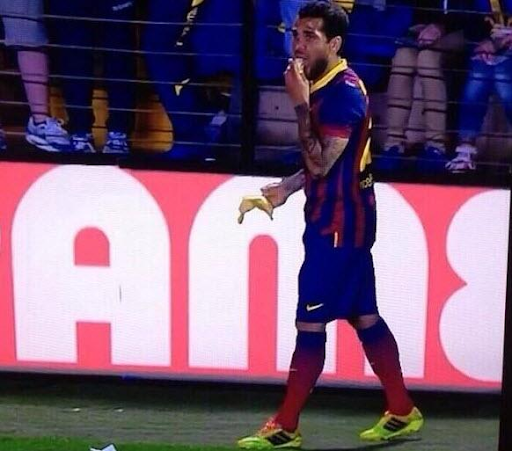
Via Twitter @gravep


As early as 2008, researcher Peter Millward pointed out that while racism in football had been widely debated in academia, the specific issue of Islamophobia had received little attention, despite documented incidents in British sporting fixtures (Millward, 2008). Recent research based on interviews with 40 British Muslim footballers shows that Islamophobia in soccer is intersectional, normalized, and perceived as ‘part of the game’: being a Black and Muslim player often constitutes a triggering factor for acts of hate (Awan & Zempi, 2025).
Acts of Islamophobia in sports are particularly rooted in football. In Spain, Vinicius Junior, a Brazilian player for Real Madrid, became a symbol of the anti-racist struggle and has been the target of harassment since his arrival in Madrid in 2018, with only a minority of these incidents having been penalized (AFP Agencia, 2026). Research published in the American Political Science Review demonstrates that public speech by Muslim athletes can reduce Islamophobia. Termed the ‘Salah effect,’ it refers to the actions of Mohamed Salah, a Muslim footballer for Liverpool, whose public stances—affirming and expressing himself as a Muslim—helped reduce Islamophobia among Liverpool fans (Mousa, 2021).

While it is true that an alarming number of cases still exist, the report on the evolution of hate crimes prepared by the Spanish Ministry of the Interior (Ministry of the Interior, 2023) shows a certain decrease on the field. As an example, while 83 racist, xenophobic, or intolerant acts occurred within the sporting arena in 2016, 22 fewer were recorded in 2022. According to Rafael Valencia Candalija—a researcher specializing in criminal law and violence in sports—this evolution is due to the effective implementation of anti-violence regulations in sports since 2007 (Valencia Candalija, 2022).

Sanctions?

In response to these incidents, the UEFA (Union of European Football Associations) stipulates in its Disciplinary Regulations that anyone who insults the human dignity of a person or group—particularly on the grounds of race, religion, or ethnic origin—faces a minimum suspension of ten matches. Likewise, the FIFA (Fédération Internationale de Football Association) provides for similar sanctions (CNN Español, 2026). Furthermore,  the FIFA drafted a three-phase anti-racism protocol:
 1: Match interruption with an announcement over the public address system.
2: Temporary suspension, sending the teams to the dressing rooms if the behavior persists.
3: Definitive abandonment of the match.
According to the FIFA Disciplinary Code, measures can be imposed on the member association even if a lack of fault is proven, provided that one or more supporters have attacked the dignity of a country or group of people through discriminatory acts based on religion (FIFA, 2023). Therefore, in the case of the match in Barcelona this past March 31st, Spain faces a minimum sanction that includes playing a national team match with limited capacity, and a fine of at least 20,000 Swiss francs. Furthermore, harsher penalties cannot be ruled out, especially with the upcoming 2030 World Cup.
Regarding the national legal framework, Article 1 of the Spanish Constitution guarantees religious freedom, which is supplemented by Organic Law 7/1980 on Religious Freedom and the Criminal Code, protecting individuals against conduct that incites hate, discrimination, or violence on religious grounds. Furthermore, Law 19/2007 of July 11 cannot be ignored, as its main objective is the implementation of a set of measures aimed at eradicating violence, racism, xenophobia, and intolerance in sports. Likewise, the work of the Observatory on Violence, Racism, Xenophobia, and Intolerance in Sports, as well as the role of the Athlete’s Defender (Defensor del Deportista), should be mentioned (Valencia Candalija, 2022). On the other hand, the European legal framework also establishes clear limits against hate speech through the European Convention on Human Rights (Islamnews, 2026).

Islamophobia and sports: How can the practice be adapted?
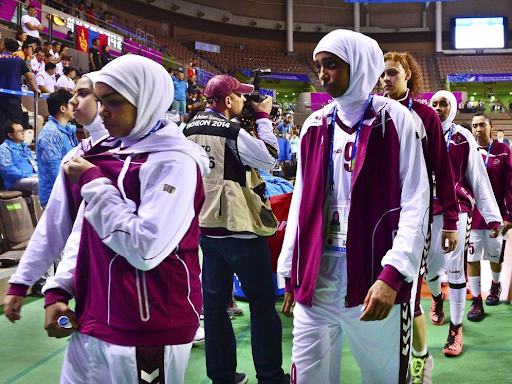
Islam is entirely compatible with top level sports performance, although examples of behavior showing the contrary continue to exist. In September 2023, the International Olympic Committee (IOC) announced that athletes participating in the 2024 Paris Olympic Games could wear the hijab, or veil, without any restrictions. However, the French Minister of Sports at the time, Amélie Oudéa-Castéra, declared that, in the name of the French concept of secularism (laïcité), French athletes would be barred from wearing it during the Games (Langer, 2024). This ban was condemned by Amnesty International, highlighting the fact that France is the only country out of 38 European countries studied to have imposed a ban on religious clothing in sports. UN experts described these bans as ‘disproportionate and discriminatory’ in October 2024 (Amnesty International, 2025). In this regard, sociologist Haifa Tlili described the racism underlying this ban as ‘violent’ and ‘conscious,’ denouncing the intention to make this population invisible. Several female athletes criticized the ‘hypocrisy’ of celebrating gender equality while discriminating against Muslim women (Middle East Eye, 2024).

Qatari players abandoning the field after hearing that playing with the veil was banned. (Reuters/El Confidencial).

Regarding the compatibility between elite sports performance and the observance of the month of Ramadan, a study published in the Journal of Sports Sciences demonstrates that elite athletes can maintain their performance during Ramadan if physical training, nutrition, hydration, and sleep are well controlled. Sports event organizers should take into account the needs of Muslim athletes when scheduling competition dates and times (Maughan, Zerguini, Chalabi & Dvorak, 2012).

Conclusion

In short, racism and Islamophobia in sports are neither new nor exceptional. They respond to a logic manifested on two levels: through acts of hate by the public during certain matches, for instance, but also through institutional discrimination, the latest flagrant example of which was the hijab ban imposed solely on French athletes during the 2024 Paris Games. When it comes to combating this Islamophobia, we can rely on the disciplinary and legal responses provided across different frameworks (national, European, international), as well as the power of representation. However, echoing what Rafael Valencia Candalija writes, it would be best to also reinforce proactive measures to prevent these acts before they even occur (Valencia Candalija, 2022).

Author: Héloïse Thouin 


Bibliography

AFP Agencia (2026, 7 de abril). “La FIFA abre expediente a la RFEF por cánticos islamófobos en el España-Egipto”, Teletica. 

https://www.teletica.com/internacional/la-fifa-abre-expediente-a-la-rfef-por-canticos-islamofobos-en-el-espana-egipto_406420 

Amnesty International. (2025, febrero). “France: Hijab ban in all sports would violate human rights and target Muslim women and girls”. https://www.amnesty.org/en/latest/news/2025/02/france-hijab-ban-in-all-sports-would-violate-human-rights-and-target-muslim-women-and-girls/  

Ara. (2026, 2 de abril). “Las sanciones a las que se enfrenta España por la islamofobia en Cornellà-El Prat”. https://es.ara.cat/deportes/futbol/sanciones-enfrenta-espana-islamofobia-cornella-prat_1_5696170.html 

Awan, I., & Zempi, I. (2025). “Muslims are leaving football, they think ‘what is the point?'”: A qualitative study on Islamophobia in grassroots football in England and Wales. International Review for the Sociology of Sport. https://doi.org/10.1177/10126902241234282  

CNN Español. (2026, 18 de febrero). “¿Cómo sancionan la UEFA y la FIFA los actos de racismo en el fútbol?” CNN

https://cnnespanol.cnn.com/2026/02/18/deportes/sanciones-uefa-fifa-casos-racismo-orix   

El Progreso. (2026, 7 de abril). “La FIFA abre expediente disciplinario a la RFEF por los cánticos racistas España-Egipto”. https://www.elprogreso.es/gl/articulo/deporte-local-lugo/fifa-abre-expediente-disciplinario-rfef-canticos-racistas-espana-egipto/202604072011321960223.html 

Fédération Internationale de Football Association (FIFA). (2023). Código disciplinario de la FIFA (edición 2023). https://digitalhub.fifa.com/m/5e88a4e8d16c6bc5/original/Codigo-Disciplinario-de-la-FIFA-2023.pdf 

Islamnews. (2026, 2 de abril). “Racismo e islamofobia en el fútbol español”. https://www.islamnews.es/articulo/actualidad/racismo-islamofobia-futbol-espanol/20260402221653001939.html 

Langer, A. (2024). “France’s headscarf ban in the 2024 Summer Olympics reflects a narrow view of national identity”. The Conversation. 

https://theconversation.com/frances-headscarf-ban-in-the-2024-summer-olympics-reflects-a-narrow-view-of-national-identity-228678 

Maughan, R. J., Zerguini, Y., Chalabi, H., & Dvorak, J. (2012). “Achieving optimum sports performance during Ramadan: Some practical recommendations”. Journal of Sports Sciences, 30(sup1). https://doi.org/10.1080/02640414.2012.696205  

Merkel, U. (Ed.). (2024). Racism, xenophobia, antisemitism, and Islamophobia in European football. Routledge. 

Middle East Eye. (2024, 31 de julio). “Paris Olympics 2024: Amnesty denounces France’s hijab ban as ‘discriminatory’ against Muslim athletes”. https://www.middleeasteye.net/news/paris-olympics-2024-hijab-bans-france-sport-discriminatory-against-muslim-athletes-amnesty  

Millward, P. (2008). “Rivalries and racisms: ‘Closed’ and ‘open’ Islamophobic dispositions amongst football supporters”. Sociological Research Online, 13(6). https://doi.org/10.5153/sro.1816 

Ministerio del Interior. (2023). Informe sobre la evolución de los delitos de odio en España 2022. Oficina Nacional de Lucha contra los Delitos de Odio (ONDOD). https://www.interior.gob.es/

Mousa, S. (2021). “Can exposure to celebrities reduce prejudice? The effect of Mohamed Salah on Islamophobic behaviors and attitudes”. American Political Science Review, 115(4), 1111–1128. https://doi.org/10.1017/S0003055421000423 

RTVE. (2026, 1 avril). Los Mossos investigan cánticos islamófobos y xenófobos en el amistoso España-Egipto. RTVE Noticias. https://www.rtve.es/noticias/20260401/mossos-investigan-canticos-islamofobos-xenofobos-amistoso-espana-egipto/17006489.shtml 

Valencia Candalija, R. (2022). Tratamiento penal de la islamofobia en el fútbol español y el británico: una visión comparativa. Revista penal México, (21), 121-140. https://ariasmontano.uhu.es/rest/api/core/bitstreams/1d358352-73da-43cf-8827-1d6fe7ba1391/content

Cover Picture: ©Infobae EFE/Alberto Estévez

Este artículo está disponible en Español

hate speechislamophobia
Share Tweet

Fundación de Cultura Islámica

La Fundación de Cultura Islámica promueve el diálogo intercultural y la educación para el desarrollo de forma independiente, científica y rigurosa, desde hace más de tres décadas.

You Might Also Like

  • Twist

    Saint Levant as a cultural voice against Islamophobia

  • Twist

    Supporting Palestine from the international civil society

  • Twist

    How the Heart of Europe is Becoming Anti-Islamic

No Comments

Leave a reply Cancel reply

You must be logged in to post a comment.

Search

Videos

  • Outside the Box: Islam in university campuses

    5 April, 2021
  • Role modelling and multiculturalism: “the Salah effect”

    22 December, 2020
  • Symposium “Tackling Gendered Islamophobia in Europe”

    22 September, 2020

Find us in Facebook

Actividades

  • To be a young Muslim woman in Spain today

    17 March, 2023
  • Quiz La Islamoteca, a new game to dismantle prejudices about Islam

    28 January, 2022
  • Symposium “Tackling Gendered Islamophobia in Europe”

    22 September, 2020

Archives

  • Home
  • ¿Por Qué?
  • Aviso Legal
  • Política de privacidad
  • Política de cookies
  • Contacto

Categories

  • Activities (21)
  • Coexist (44)
  • Multimedia (53)
  • Share (97)
  • Teach (81)
  • Twist (97)
  • Uncategorized (1)

Tags

Coexistence Europe hate speech history Islam islamophobia media prejudices racism Refugees tolerance USA videos women

Latest news

  • Islamophobia in contemporary sports

    9 June, 2026
  • Saint Levant as a cultural voice against Islamophobia

    17 January, 2026
  • Supporting Palestine from the international civil society

    1 December, 2025
  • The Islamophobic Paradox of Torre-Pacheco

    10 September, 2025

© 2015 Fundación de Cultura Islámica | web by Trixma

Gestionar el consentimiento de las cookies
Utilizamos cookies propias y de terceros para fines analíticos y para mostrarle publicidad personalizada en base a un perfil elaborado a partir de sus hábitos de navegación (por ejemplo, páginas visitadas).
Funcional Always active
El almacenamiento o acceso técnico es estrictamente necesario para el propósito legítimo de permitir el uso de un servicio específico explícitamente solicitado por el abonado o usuario, o con el único propósito de llevar a cabo la transmisión de una comunicación a través de una red de comunicaciones electrónicas.
Preferencias
El almacenamiento o acceso técnico es necesario para la finalidad legítima de almacenar preferencias no solicitadas por el abonado o usuario.
Estadísticas
El almacenamiento o acceso técnico que es utilizado exclusivamente con fines estadísticos. El almacenamiento o acceso técnico que se utiliza exclusivamente con fines estadísticos anónimos. Sin un requerimiento, el cumplimiento voluntario por parte de tu proveedor de servicios de Internet, o los registros adicionales de un tercero, la información almacenada o recuperada sólo para este propósito no se puede utilizar para identificarte.
Marketing
El almacenamiento o acceso técnico es necesario para crear perfiles de usuario para enviar publicidad, o para rastrear al usuario en una web o en varias web con fines de marketing similares.
  • Manage options
  • Manage services
  • Manage {vendor_count} vendors
  • Read more about these purposes
Preferencias
  • {title}
  • {title}
  • {title}